tsoileau@fostermarketing.com
Emotion Creates Impact

Emotion Creates Impact

Instead of Checking Your Emotions at the Office Door, Use Them to Engage Your Audience

You may be all business, but sometimes exuberance – or worse, insecurity — takes centerstage, no matter how hard you try to remain professional.

As someone who has worked in a newsroom, I can empathize with the daily emotional breakdowns of news producer Jane Craig (Holly Hunter) in the 1987 film “Broadcast News.” And, remember the famous line from team manager Jimmy Dugan (Tom Hanks) in the 1992 movie “A League of Their Own” when one of his players was having a tough day, “There is no crying in baseball.” These are memorable examples of the struggle to remove emotion from a professional environment. But, is it possible to completely remove emotions from the workplace? And, should we? Emotion has impact, so keeping your work devoid of emotion may stifle your potential.

What’s your eq?

Emotional intelligence, or emotional quotient (EQ), measures a person’s ability to manage and understand their own emotions and others’. Many experts consider this a more powerful indicator of success in the workplace than IQ or personality, according to Talent Smart EQ.

Those with higher EQ scores tend to have the ability to better manage stress; communicate more effectively with clients and coworkers; handle challenges and setbacks; navigate conflict; and build stronger relationships. Such skills make for stronger managers and employees and can lead to career advancement.

A survey by Talent Smart EQ found that every point increase in EQ equates to $1,300 added to your annual salary. Emotional intelligence is a flexible skill, so you can improve with practice. So, amping up your emotional game could improve your career outlook.

do you remember?

We’ve all said it, “Do you remember that commercial where …?” Those commercials you recall days or even years later are usually because of their emotional content. Whether they make you laugh, cry or become a bit nostalgic, emotional advertising makes an impact. Consumer products and non-profits have been using this secret sauce since the early days of advertising to sell everything from batteries to gum and for causes such as animal rescue and advancing education. Airbnb even underwent a rebrand to leverage emotion, focusing on building a sense of belonging. And according to Alder and Alder, it worked, with Airbnb showing an 80 percent increase in revenue within two years.

In the business-to-business segment, we’ve seen emotion leveraged through comedy and storytelling in efforts by Zendesk and IBM.

In digital marketing, tapping into emotion generally leads to higher conversion rates. In a world where marketers are vying for audience attention, you have about 8 seconds to make an impact before you miss your chance with a prospect. The good news? Research shows it only takes 3 seconds to stir a gut reaction that could make a lasting impression, according to The Drum.

In social media, we encourage viewers to share, click and comment. Why not use emotion to amp up engagement? The Digital Transformation Institute says to engage emotionally with prospects and clients, focus on the “4 Rs.”

The ‘4 Rs’ of engagement

Consider applying these concepts to your marketing efforts.

Respect: We want to like the people we work with but, at the very least, we want them to be honest, trustworthy and have integrity. It really comes back to the Golden Rule … “do unto others” and all that.

Reciprocate: You should strive to build a relationship, as you do face-to-face, so don’t make it all about you. Get to know your viewers, too.

Recognize: Create content they care about. We all like to talk about our businesses, but do your customers really want to hear about you every day? Make sure you are creating content that provides timely information, tips to make their jobs easier or offer moments of levity to brighten their busy day.

Reward: Offer something of value that your audience will want. Consider giving them free access to a webinar or a case study.

Research from The Digital Transformation Institute shows striking an emotional chord pays off, with 70 percent of consumers with a high level of emotional engagement with a brand spending twice as much time engaging with that company.

Welcome to emotional marketing

Indeed.com defines emotional marketing as, “messaging that companies use to target specific human emotions and engage with consumers. These emotions can include happiness, anger or sadness.” Additionally, business leaders note that another emotional tactic involves referencing current events to create an emotional connection.

Ready to give it a try? Consider these tactics in your next campaign:

  • Foster inspiration: Encourage your audience to dream big.
  • Use aspiration: Tell how your brand can help customers achieve more.
  • Location: It’s not about a map, it’s about showing your concern about where your customer is and being connected to that location, such as offering aid when needed or sponsoring an event.
  • Mark milestones: Making a viewer recall a fond memory of an anniversary helps them remember your brand, too.
  • Show some love: Love is a big emotion and viewers actively seek it out. Bring a bit of this into your brand through an effective campaign or even a play on words.
  • Color: Colors carry emotion, so sharpen your color theory skills.
  • Tell a story: Storytelling is powerful and a narrative creates a memorable impact. Don’t just talk about your product, share the product’s origin story.

Feeling a bit emotional after all this? Good, then it’s time to get to work on your next marketing campaign. We’d love to help you with your next campaign. Connect with us on LinkedIn or via our website.


Review, Revise, Reset, Refresh

Review, Revise, Reset, Refresh

A Mid-Year Marketing Check-in

By Vice President of Account Services Megan Schreckenbach

Where has the year gone!? Summer is officially over (albeit 95-degree days in Houston); the kids are back in school (hooray for that one); football season is SO close; and there are 17 Saturdays until Christmas (in case you were wondering).

It’s a natural time for many of us to reset at home and get back into a routine. As we look towards Q4, this time of year also calls for a marketing plan check-in to revisit and make adjustments as needed to finish the year strong.

Why a review?

Here are some tips for completing a successful marketing plan review.

  • Take a Look Back
    First, take a look back at where you’ve been. Along with reviewing marketing efforts to date and associated ROI, analyze sales performance to date and review how this stacks up to your initial goals.
  • Check-in with Sales
    Meet with the sales team to ensure alignment. Consider jumping on some sales calls and implement any shared recommendations for marketing initiatives.
  • Revisit Organization and Marketing Goals
    The marketing plan is often tied to organizational goals so addressing these overall goals is an important step. Consider it a mid-year SWOT (strengths, weaknesses, opportunities, and threats analysis). Ask your team:


    • What changes are now affecting our organization that might mean you need to adjust your goals?
    • Are there new target audiences that we need to take into consideration?
    • Are some of our goals no longer relevant?
    • Are there any new goals we need to create?
  • Touch Your Analytics
    By taking a good look at the data available for measuring the effectiveness of your marketing tactics, compare your actual results vs. your intended results. Discuss what worked or did not work and what needs to continue. What do we need to focus on that we might have missed?
  • Look Closer at Your Top Audiences
    Who marketing serves guides what is produced, so is our knowledge of the audiences still accurate?


    • Have your audiences been impacted by anything lately?
    • What new challenges are they faced with that we can support?

Finish the year STRONG.

This exercise will leave you with a refreshed outlook and a better roadmap for the rest of the year, and we’re here to help!

At Foster Marketing, we are actively working on innovating our cost-effective, creative solutions. With decades of experience as a full-service marketing partner, we know how to provide you with the best guidance in integrated marketing communications strategies, digital marketing, public relations, trade show and event marketing and advertising and awareness efforts.

Planning for next year? Or the next 5 years? You should be. We can help. Call us at 281-448-3435, contact us online or connect with us on LinkedIn.

Playing the Social Engagement Game

Playing the Social Engagement Game

In today’s marketing game, it’s all about who’s the best at engagement. How are you actively offering the most exciting user experience? Are you hitting the sweet spot? Our team has identified some trends to avoid fielding errors in your social engagement game.

What is Augmented Reality (AR)?

And How Can I Use It in Business?

Augmented reality (AR) is the integration of digital information within the user’s environment in real time. It is the blending of interactive digital elements – such as dazzling visual overlays, buzzy haptic feedback, or other sensory projections – into our real-world environments. It brings together your imagination and the real world as one.

Watch this film from Apple

Snapchat is a fun and popular messaging app and service offering AR effects. It’s a fast and interactive way to share a moment, especially for those companies consistently attending industry events. For example, at your next trade show. Or, how about making that next facility grand opening more enticing with the use of AR effects.


On Instagram, you can use AR as computer-generated effects superimposed on real-life images, called AR filters. AR filters work with your camera, adding a layer or imagery in the foreground or background of your image.

Custom AR filters on Instagram are a way to connect your brand’s name and account to the filter. Anyone using it or seeing it will see your company information. While there are many filters that create a silly feel or serve well for special occasions, they are also powerful for brands by driving organic traffic.

How? One follower shares a filter and reaches many of his or her own followers. Those users then share the filter with their followers. The bases are rounded until hundreds, even thousands of people have seen or used the filter, amping up a brand’s name and social media followers. And, it’s a fun way to increase brand awareness!

Clips by Apple lets users cut together short videos and photos, add AR filters, emojis and music and send them out into the world – albeit without a standalone social network attached.

It’s also a fun way to enhance your real-world environment with playful, immersive effects. Test it out by recording a fun message or company announcement in a vertical or horizontal orientation, sized to social standards, and share your augmented world to your newsfeed!

What is virtual Reality (vR)?

You may have seen ads for – or persons using – headsets to interact in a virtual world. That is Virtual Reality (VR). Virtual reality is a computer-generated environment with scenes and objects that appear to be real, making the user feel he is immersed in his surroundings. This environment is perceived through a device known as a Virtual Reality headset or helmet.

Facebook recently took a big leap into virtual reality. While social VR has been around for a while, Facebook is now offering its own virtual reality social networking platform called Horizon. The platform offers easy building tools that allow for users to bring ideas to life within the VR.

What’s social media without bringing your imagination to life?

Expand Your Reach With Location-Based Marketing

Geolocation refers to the use of location technologies such as GPS or IP addresses to identify and track the whereabouts of connected electronic devices. Using geolocation in social media has become an increasingly successful way to improve the effectiveness of a social media campaign. Geolocation-based data enables companies to learn more about their customers, better adapting to their needs and interests.

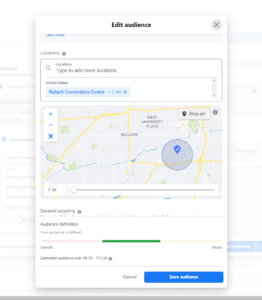
Geotargeting is a geolocation-powered tactic to reach an audience of people within a specific location. Facebook and Instagram have made geotargeting more accessible, with the option to customize different sets of audiences, depending on the targets’ locations. Your reach potential jumps from 6,000 to 60,000.

Throw a Curveball With a Snapchat Geofilter

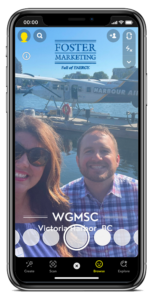
Snapchat Geofilters let you add specific, location-based filters to your photos. Add some company customization at your next trade show, customer event or facility tour! And, at that facility tour, encourage attendees to take photos using the filter! Snapchat charges per Geofilter. They are fairly inexpensive yet provide a lot of value.

Don’t strike out by missing your opportunity to take part in these user-generated content techniques on social media.

At Foster Marketing, we are actively engaged in offering new solutions to best position our clients for success. Step up to the plate and get started with us today by giving us a call.

I survived…

I survived…

… spankings, lead paint, rusty playgrounds, secondhand smoke, toy guns, no seat belts, no helmets and drinking from the hose.

In fact, when a waiter at a restaurant takes my drink order I’ll ask for water first. He’ll dutifully ask “still” or “sparkled” and I’ll answer “growing up I drank out of the hose.” I’ll either get a startled look or a laugh. No pretentiousness about me.

We’ve survived the worst of COVID thus far. We will survive inflation and the gasoline crunch and our businesses will survive if we’re vigilant … and not complacent. How do I know? Vice Admiral James Stockdale convinced me.

The Stockdale Paradox

The Stockdale Paradox is a concept, along with its companion concept, Confront the Brutal Facts, developed by Jim Collins in his great book, Good to Great. The concept is named after James Bond Stockdale (1923-2005), a United States Navy Vice Admiral and aviator who was awarded the Medal of Honor as a prisoner of war for more than seven years during the Vietnam War.

Stockdale wound up in the Hoa Lo Prison, the infamous “Hanoi Hilton,” and spent nearly eight years under unimaginably brutal conditions. He was physically tortured no fewer than 15 times. Techniques included beatings, whippings and near-asphyxiation with ropes.

“I never lost faith in the end of the story,” Stockdale told Collins. “I never doubted not only that I would get out, but also that I would prevail in the end and turn the experience into the defining event of my life which, in retrospect, I would not trade.”

When asked what was the most important thing that he learned, he said “That’s easy. The optimists …oh they were the ones who said, ‘We’re going to be out by Christmas.’ Then they’d say, ‘We’re going to be out by Easter.’ And Easter would come, and Easter would go. And then Thanksgiving, and then it would be Christmas again. And they died of a broken heart.”

What is the Stockdale Paradox? Stockdale told Collins …

“You must never confuse faith that you will prevail in the end – which you can never afford to lose – with the discipline to confront the most brutal facts of your current reality whatever it may be.” – James B. Stockdale

WATCH VIDEO: Stockdale Paradox: A Message for Uncertain Times

Defining Your Current Reality

Many successful business owners suffer from survivor bias, a phenomenon that refers to the human tendency to study successful outcomes and ignore the accompanying failures. Or, as Collins mentions in another concept, failure to face the Brutal Facts.

Because of this, we adopt opinions, structure businesses and make decisions without examining all the data which can easily lead to failure.

In a recent presentation, Len Herstein, the author of the book Be Vigilant, discussed how success leads to overconfidence which leads to unawareness which leads to complacency.

He states that “success is not the end goal; keeping it is.” And that’s where complacency comes in.

Herstein says complacency is not laziness; it’s overconfidence, self-satisfaction, smugness and unawareness of threats. The opposite of complacency is not paranoia, it’s vigilance.

Herstein says the two signs your company is at risk of complacency are:

  • You can’t let go and,
  • You don’t question success.

Two vigilant strategies to fight complacency are:

  • Give autonomy
  • Debrief success

You Can’t Let Go

Complacency flows up and down the organization from the C-suite to the front line. All along, discretion has a key role in vigilance.

Discretion in this instance is defined as individual choice or judgment or the power of free decision or latitude of choice within certain legal bounds, i.e., the “the decision was left to his discretion.”

Discretion drives awareness and engagement. A disengaged front line creates an unaware C-suite. The more scripted a role, the more checked out an employee is. Autonomy increases engagement 17%. According to Herstein, 59% of employees report being micromanaged.

So, where do you start? According to Herstein there are five strategies:

  • Behaviors/outcomes vs. special tasks. Seek an end result, not define the means to an end.
  • Allow for flexibility in performance metrics. Do employees produce just as well from home as they do in the office?
  • Shalls vs. Mays. “Shall” is a command; whatever follows after “shall” is mandatory. On the other hand, “may” is discretionary; what comes after “may” is at the discretion of the person making the decisions.
  • If you give discretion, allow for discretion. With discretion there will be mistakes. We learn a lot from mistakes. Education can be expensive but worth it in the end.
  • Allow employees to manage their timelines. A tough one, but it’s all about the end result.

Question Success

Vigilance is questioning everything even when everything goes right. Success hides the micro failures.

For example, I know in our business (and this is maybe a residual trait from coaching in athletics), I was much more vigilant when things were going great, i.e., didn’t want things (billing, mistakes) falling through the cracks. And, tended to be more supportive of folks when things were not going well.

The benefits of debriefing success are it forces awareness, builds engagement, fights overconfidence, strengthens relationships and protects the success.

Again, Herstein outlines five keys to debriefing success:

  • Outcome Independent. You put yourself out there and act based on what you think is right, without knowing what will happen and without hoping for a certain outcome.
  • Timely / Frequent. We always debate whether a yearly review or multiple reviews? Same with feedback.
  • Titles at the Door. Reminded of the line in the One Minute Manager when the employee comes to the Manager with a problem and the Manager responds: “Good! That’s what I’ve hired you to solve.”
  • Structure. How you receive the information can be at the discretion of the giver of the information.
  • Share the Findings. Part of the communal effort to build success companywide.

Leave complacency at the door. Let go, debrief success. Remember …

“Success is not the end goal; keeping it is.” -Len Herstein

For 42 years, Foster Marketing has survived and thrived by empowering our employees and never resting on our laurels. You can, too. For more information on how you can create a successful, non-complacent company, call Foster Marketing and we can show you the way.

Call us at 281-448-3435, contact us online or connect with us on LinkedIn.

Visual Communication: An Art and Science

Visual Communication: An Art and Science

Have you ever heard that the human attention span has shrunk to less than that of a goldfish? Whether this is true or not, most of us are aware of how constant consumption of media has ultimately affected our daily lives. Bite-size information is being aggressively pumped out from a plethora of social media platforms, and we are swept into an endless feedback loop of instantaneous reactions. … Phew!

It can be extremely overwhelming to navigate this information overload, and even more difficult to be recognized among content that is scrolled past and skimmed over. People only expect easily consumable bits of relevant information. So, how is your company supposed to compete? How do you cut through the clutter? You don’t want to swim aimlessly in the fishbowl.

Seeing Is Believing

Generally, about 93% of communication is considered nonverbal. The part of our brain that is responsible for long-term memory is the part that remembers images. Visual communication can help your audience retain information longer and form stronger connections with your brand and message. When we say visual communication, we are talking about things such as fine art, videos, infographics, slide deck presentations, brochures, billboard ads and so much more. You can use visual language to evoke emotions and project tone by, for instance, your choice of specific typefaces or use of colors.

People often find images relatable, which is also why authentic visuals are proven to be more successful than the use of stock imagery. What you put out there needs to be tailored specifically for your audience. You don’t want to appear repetitive, boring or out of touch. It’s important to have a strong marketing strategy in place for visual elements to support. While visual communication can be highly effective, if your marketing message is not well crafted and targeted, your brand will ultimately suffer.

“A picture can paint a thousand words.” 
– Frederick R. Bernard

This poetic cliché speaks a universal truth: You are fluent in a language that you are probably not even aware of – reading imagery. Illustrator Christopher Niemann comically recognizes this art of speaking without words in his TED talk, pointing out that no one really taught you, but you do it more often than you know. As a child you would draw a circle and five lines and we understand that this is a hand. The fact that people are incredibly good at interpreting imagery and filling in the blanks makes the job of a designer a bit easier. We have the power to convey a complex idea and communicate it in a very simple form that you are able to immediately understand. The most obvious example is iconography. Do you use emojis when you are texting? If you received a text with maybe an airplane or a car, you know that these images do not simply communicate what they are in actuality, an airplane and a car, but the entire concept of travel.

✈️  🚘

An example of visuals affecting how you feel could be the range of internet signal symbols on your phone. Depending on the signal, it might evoke certain emotions of fear, frustration, comfort and relief.

Take this image for example: you see a person riding a bike, correct? But, is there actually a bike? There are really only two ovals drawn and the image of the bike is made up by your mind.

Well, maybe there are some clever visual hints in there. But you get the idea. You have an innate and highly intellectual understanding of visual language. So, how much information do you really need to convey to get your message across? The answer is just enough. Visuals are a communication shortcut. You can save time and say more with less.

“The deeper something is etched into your consciousness, the fewer details you need to have an emotional reaction.” 
– Christopher Niemann

Overall, it is essential that designers have an understanding of the visual and cultural vocabulary of a particular audience. Niemann confirms that possibly the most important skill for a designer is empathy, because the magic doesn’t happen on a piece of paper or behind a tiny handheld screen, that magic spark is ignited in the eye of the beholder. Touching the mind of the viewer is the goal. We do our job better by becoming better observers. Our role is to be aware of what people expect and what they already know and make our design intentions meet these two things.

Why Is Visual Communication Important?

More information is consumed today than ever before at a much faster pace. You want your company and message to stand out in the crowd, which is why understanding how to communicate visually is key. Not only can visuals help you present something in an attractive way, but in a way that is more digestible and easier to understand. If you are dealing with a topic that is particularly dry, visuals can enhance your message and give it the appeal you need to reach more of an audience. Visuals build brand recognition, that is, with consistent standards such as colors, text, images and designs that reflect your brand personality.

Your company should be taking advantage of the full spectrum of communication methods. If you are only doing part of the work, you cannot reap the full effect of the benefits.

Foster Marketing has a long-standing history of leveraging talented artists and designers, both internally and outsourced. Our team has ample resources to help you build upon your brand and message. Let Foster Marketing help you amp up your visual communication and marketing strategies. Call us at 281-448-3435, contact us online or connect with us on LinkedIn.