
When “Consistency” Starts Working Against You
There comes a point when consistency alone is no longer enough to sustain audience engagement. Not because the content quality has declined or because the audience has lost interest, but because the messaging has become overly familiar.
Many brands are encouraged to follow the same approach: maintain a consistent presence, reinforce core messaging and repeat key themes over time. While this strategy is effective in building recognition initially, it can eventually lead to predictability.
As writers and branders, we live for the mantra, “tell them, tell them what you told them, then tell then again!” And this still holds true today, but when the same hooks, structure and content style are used, it’s making the content easier for audiences to overlook. This is where audience fatigue begins to emerge.
Audience fatigue occurs when content becomes so familiar, overly repetitive or boring that audiences stop actively engaging with it, even when the information remains valuable.
What Audience Fatigue Actually Looks Like
Audience fatigue rarely happens all at once. More often, it develops gradually. Engagement begins to decline, content performs adequately but no longer stands out, and even strong ideas generate weaker responses than they once did.
What makes audience fatigue difficult to identify is that nothing appears obviously broken. Content is still being published, audiences are still seeing it, and overall activity may remain consistent. However, attention begins to diminish as familiarity reduces curiosity and urgency.
Lack of Variety Lowers Attention
Audiences are constantly filtering the information competing for their attention. As content becomes repetitive or overly familiar, people begin to assume they already understand the message before fully engaging with it, even when the information itself remains valuable.
This is why brands can gradually lose visibility while still maintaining a consistent content presence. The issue is not a lack of activity, but a lack of variation and evolution in how ideas are communicated.
Consistency remains important for building recognition and trust, but without adaptation, it can eventually lead to diminishing returns. To maintain engagement over time, brands must continue finding new ways to present familiar ideas in a way that feels relevant, specific and engaging.
How to Fix Audience Fatigue
1. Re-imagine the Content
Maintaining audience interest does not always require introducing entirely new topics. In many cases, the same subject can remain effective when approached from a different perspective.
Instead of repeating the same message in the same format, consider expanding on the reasoning behind an idea, sharing lessons learned through experience or offering a perspective that challenges conventional thinking. Familiar topics often regain attention when they are presented in a way that feels more relevant, specific or unexpected.
2. Break the Pattern
When content consistently follows the same format, tone or structure, audiences become more likely to overlook it. Over time, predictability reduces engagement, even when the underlying message remains valuable.
Introducing variation in delivery can help restore attention. Small adjustments in format, tone, pacing or structure are often enough to make content feel more engaging and distinct without requiring a complete shift in strategy.
3. Value Over Volume
Increasing content output does not necessarily improve performance. In many cases, publishing more frequently without introducing meaningful insight can contribute to audience fatigue rather than prevent it.
Strong, well-developed ideas tend to have a greater impact than consistently producing content that lacks depth or originality. Prioritizing relevance and quality over volume often leads to stronger long-term engagement.
4. Be Specific and Re-engage
Generic messaging is easy to overlook because audiences have encountered similar statements repeatedly. Specificity, however, creates distinction and encourages engagement.
For example, a statement like “Marketing is about storytelling” conveys a broad idea but lacks tension or originality. In contrast, “Top 5 Reasons Why Marketing Fails” presents a more specific perspective that encourages audiences to think more critically about the issue.
Specificity helps content feel more credible, memorable and engaging by introducing clarity and perspective rather than relying on generalized messaging.
A Better Way to Think About Consistency…Replication with Relevancy
The objective of content marketing is not simply to maintain a constant publishing schedule, but to remain relevant and engaging over time. The brands that sustain audience attention long-term are not only consistent in their presence; they are also willing to evolve in how they communicate their ideas.
When content begins to feel overly familiar, it is often a sign that the approach needs refinement rather than abandonment. Audiences do not necessarily disengage because content quality has declined. In many cases, they have simply encountered the same message delivered in the same way too frequently.
Attention is not something brands earn once and retain indefinitely. It must be continuously re-earned through fresh perspectives, stronger specificity, and thoughtful adaptation. Often, even a subtle shift in framing or delivery is enough to make familiar ideas feel engaging again.
Put Your Content to the Test
- Are you seeing a lower engagement in your brand equity content?
- Do you post with the same rhythm?
- Do you share content in the same format every time?
If you answered yes to any or all of these, call Foster Marketing at 281-448-3435 or contact us online and let us help you break the pattern and strategize on a new constant!

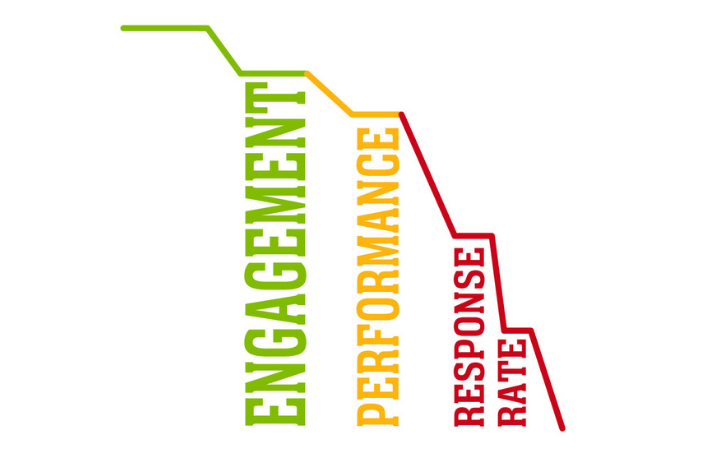

Repurposing a great piece of content in multiple formats and across channels is a commonly used approach in content generation; however, even the best stories can get stale.