It Lacked a Brand Identity
When people think of a brand most times they think of a logo. But a brand is so much more. It’s your essence and your values as much as your look or actions. People do not buy what you do. They buy who you are. And who they become after they choose you. Customers purchase confidence, progress, belonging, identity, respect, peace of mind, relief and possibility. These are your value currencies. This was best exemplified by a decades ago advertisement for McGraw Hill promoting advertising in their many magazines. It graphically shows why you must develop your brand identity.
And, It All Starts With Building Trust
We called it Ad Agency Baseball when we first started building our (Foster Marketing) marketing program. It was Ad Agency baseball, but you could put the title on pretty much anything: it could be Oil Services Baseball or Accounting Baseball … or even Romance Baseball.
In Agency Baseball, first base is building Trust, second base is developing Needs/Budget, third base is Timing and home base is when you win (account, sale, score, etc.). Practically all of our Foster Marketing efforts are dedicated to building trust … whether through our marketing materials, our relationship building or our community outreach.
Tom Martin at Converse Digital says that “you build awareness through your content, thought leadership and showing up consistently in the spaces where your ideal clients already pay attention. Not all at once, not perfectly. Just consistently. “That’s The Propinquity Principle: the idea that repeated, meaningful exposure builds familiarity and familiarity builds trust. When you do finally walk into that conference room, people don’t meet you cold. They’ve heard your name. They’ve read your post. They feel like they already know you a little. That shifts every handshake from a cold introduction to a warm reconnection.”
One of our many strengths, I believe, is the emotional intelligence (EQ) of our staff with our prospects and clients. Emotional intelligence is self-awareness; the ability to identify and understand your own emotions and how they influence your words, actions and decisions. But self-awareness alone isn’t enough. You must also develop emotional regulation, which is the ability to manage emotions effectively in service of a desired outcome. Emotional intelligence drives leadership and deepens trust. Trust is built through vulnerability and authenticity. When people feel understood, they perceive greater value.
Prospects Seek You Out. Pricing Power Starts Before the Proposal
Thus, when there’s a need they seek you out. That’s Second Base.
Trust has been built on your company’s expertise and ability to solve needs or problems that a client might have. Once that need(s) or problem(s) has been identified, determining the value of your services or product is next. When those value currencies are clear, pricing power increases because the exchange feels fair.
McKinsey research confirms that companies with strong differentiation and brand clarity sustain higher margins and greater pricing power. Pricing power does not begin at the proposal stage. It begins long before that with you building trust.
Perceived value forms in your client’s mind through every touchpoint, every relationship and every signal about who you are and why you matter. By the time their need arises, your groundwork has already been laid.
Value grows through positioning, meaning and the future your customer imagines for themselves after choosing you.
A Short Mention on Third Base – Timing
There will be times when we’ll approach a prospect with needs and give them a proposal with value pricing but we won’t get the job. It has nothing to do with whether they trust us to do the job. Or the value of your pricing. It may have everything to do with timing, or third base.
I can remember early in my career developing advertising for a car dealership. The dealer loved our work, loved our price but just didn’t want to go forward. The problem: he couldn’t get the cars so why advertise if you don’t have any cars to sell. Or it could be a budget problem. Our pricing is good, but they just don’t have the budget right now. C’est la vie.
The Importance of Branding for Mergers and Acquisitions
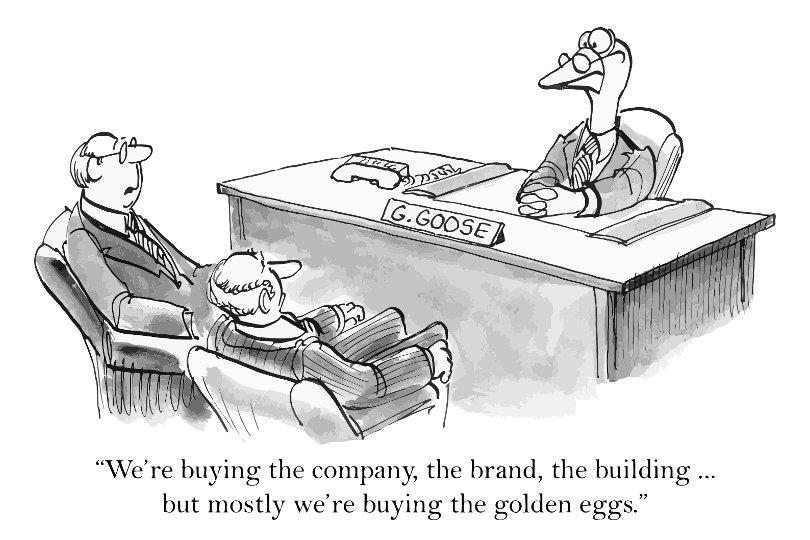
In 40-plus years of owning Foster Marketing and then selling it to current owner Tiffany Harris, I’ve learned a lot about succession planning and selling a business. With Tiffany it was an internal sale so the value gap was equitable. That’s not always the case. Brand marketing guru Bruce Turkel explains, “It used to be that if you wanted to sell your business, you estimated your EBITDA, adjusted it based on your industry’s accepted multiple and brought it to market. Today, business valuation is shaped as much by perception as by performance. And sometimes the real value of a company lies in the story behind the numbers and how clearly that story is understood.” And, as Turkel always adds in his blog, but first, a story.
The first time I recognized the importance of branding for building brand equity and value in a sale was in 1996. We were approached by Stabil Drill, a leading downhole rental tool company contemplating selling the company. They had built a strong company but not a strong brand in a crowded market. One oilfield services firm had offered them $10 million for the Lafayette-based company. Stabil Drill’s CEO and CFO felt like it was worth much more – the value gap. What to do?
Stabil Drill approached Foster Marketing with the thought that marketing would bridge the value gap and hired us to prove their point. Advertising, PR, collateral and other means were developed. Through those efforts, within a year the firm was acquired by Superior Energy Services for $25 million in cash and notes. Not only were we rewarded by Stabil Drill, but then we were retained to handle Superior Energy’s marketing for many years thereafter.
Turkel says the value gap is not created by financial statements alone, but by perception. “They are not paying for effort or history. They are paying for what they believe the business can do for them next,” he says. He lists four things to increase value: position, differentiate, prove and communicate.
- First, you need to understand your market position in the context of competitors, alternatives and the expectations of your customers. That’s why in the late ‘90s Foster Marketing made a conscious decision to focus on the oil and gas (and then other process) industry. Our branding statement is that we are Full of Energy – both literally and figuratively.
- Second, in the world of consolidation, sameness and AI-powered everything, the generic company is the most fragile model in the room. Specialization isn’t just a branding play but it’s a margin play. Niche firms have higher margins, close deals faster and keep clients longer.
- Third, show how you are different with results, case studies, customer experiences and other clear evidence that what you claim is true.
- Fourth, communicate and market your value. Your website, social messaging, your outreach at trade shows and your content build awareness and trust. That’s worth something! Get what you are worth.
Finally, if you’re looking for a firm that can get you from First Base to Home in a hurry, give Foster Marketing a call at 281-448-3435 or contact us online. We are truly Full of Energy!